
From “Biggles” (children only) to the Vulcan bomber cockpit, the museum has six open cockpits on display with visitor access subject to volunteer guide availability.



From “Biggles” (children only) to the Vulcan bomber cockpit, the museum has six open cockpits on display with visitor access subject to volunteer guide availability.

We do not charge for access to our cockpits, however, our outdoor Trident airliner and Vulcan bomber cockpits are very popular, and a free timed ticketing system is in operation to avoid lengthy queues outside in all weathers (booking station inside the museum).
Tours are available in the main display hall from the ticket desk by the glass hangar doors. The tour lasts about 15 minutes and volunteer guides will host you during your tour.
Short videos about both aircraft are shown in the main display hall as an alternative.

Due to their historic nature, our cockpits have no disabled access and entering the Vulcan bomber is via a steep ladder, flat shoes being essential.
Access to the Gnat, Hunter and the Trident cockpits is via staircases and parents or guardians will need to assist younger children to enter Biggles and Amy.
Be aware that a maximum height restriction of 1 metre applies for access to Biggles and Amy and a minimum height restriction of 1 metre applies to the Vulcan bomber cockpit.



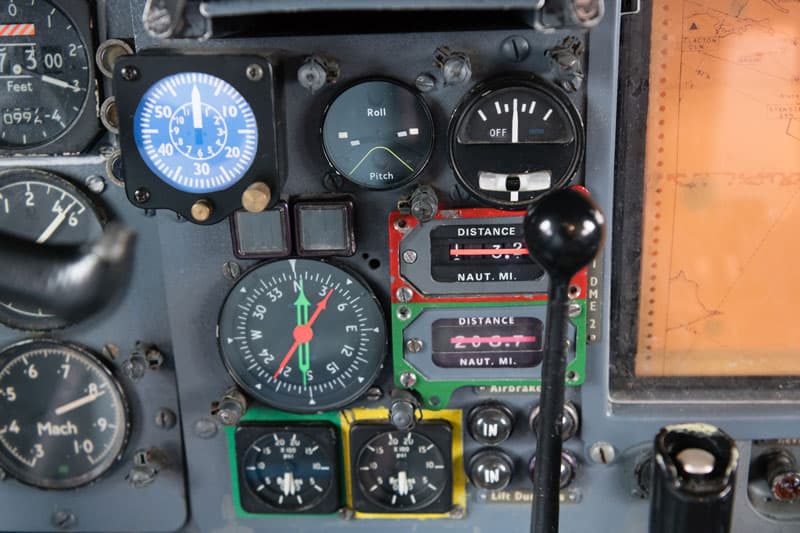

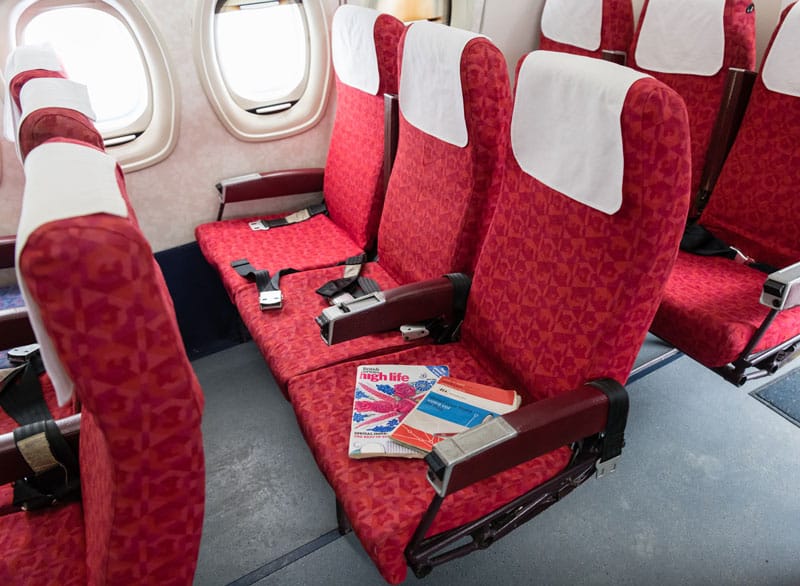


The Hawker Siddeley built Trident Airliner, registered G-AWZU, first flew in June 1972 and was delivered to BEA in October 1972 and continued its service life until 31 December 1985. Its final positioning flight was to Stansted in March 1986, to be utilised initially in ground training and then fire service training roles.
Subsequently G-AWZU went to GJD AeroTech, at Bruntingthorpe Aerodrome, for disposal, and from where Jet Age Museum acquired the ‘cockpit’ from Gary Spoors including the forward cabin section of the fuselage. This acquisition was made because of the significant link which Gloucestershire has with this aircraft, being the 1st passenger aircraft to adopt the Smiths Autoland system.
G-AWZU cockpit arrived on-site at Jet Age Museum 30 November 2013 where missing windows were replaced, passenger entry and cabin service doors were refitted and a temporary rear bulkhead with entry door was installed. Throughout the following year the cockpit remained in position, whilst funds were made available to design and manufacture a bespoke steel entry stairway and platform, to ensure easy and safe access to the entry door in the rear bulkhead. In early January 2015 Phase1 restoration plans were drawn up, a timetable of work was established and a team of willing volunteers was assembled to commence work on 24th Jan 2015.
The refurbished cockpit areas provide the visiting public with an interesting interactive exhibit within the cabin, to include a Trident History display + a Smiths display + a ‘live’ Air Traffic Control visual feed (care of Staverton Airport ATC) and access to the flight deck.

The massive “flying triangle” Avro Vulcan bomber was the third and longest serving member of Britainʼs trio of so-called V-bombers, along with the Vickers Valiant and Handley Page Victor.
The Vulcan was designed to carry nuclear weapons deep into enemy territory.
The type first flew in 1952. 136 Vulcans were built, serving in the Royal Air Force from 1956 to 1984. Although usually armed with nuclear weapons, Vulcans could also be used for conventional bombing, as shown in spectacular fashion when a lone Vulcan flew from the UK to bomb the main runway of the Falkland Islands following the Argentine invasion of 1982. A single airworthy Vulcan survives, XH558, restored to flying condition by the enthusiasts of the Vulcan to the Sky Trust.
Our cockpit is from a Vulcan B2, serial XM569, the actual aircraft in the picture above. It served in five different RAF Squadrons in the UK and in Malaysia and Oman. The Vulcanʼs undercarriage was made by Dowty here in Gloucestershire. The cockpit is pretty much complete and is one of our most popular exhibits, thanks to our open cockpit policy. It is on loan to Jet Age from Gary Spoors. Ex Bentham, Staverton, Enstone, Cardiff, 44, Wadd Wing, 27, Cott Wing, 27. SOC 21.1.1983.
The Vulcan long range bomber cockpit 1956 – 1984) is accessible at the Jet Age Museum. The delta wing strategic bomber was fitted with Electronic Counter Measures (ECM) and terrain following radar making it highly elusive.

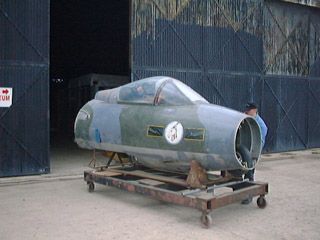

The Hawker Hunter, designated XE664, was part of the second production batch of 100 aircraft built at Hawker Aircraft (Blackpool) Ltd. The contract is dated 24th August 1953. XE664 was delivered to the RAF on the 23rd of May 1955 to No.5 Maintenance Unit, of No.26 Squadron.
In 1958 XE664 returned to Hawker Aircraft Limited where it was converted to Mark 8 standard for the Fleet Air Arm. It was delivered on the 12 March 1959 and served with No.764 Squadron. In the conversion process the single seat fighter nose was removed, and the two-seat trainer nose was fitted.
After this the aircraft was converted into a Singaporean T Mark 75 (516) and they received it in September 1970.
The cockpit section was acquired as a training aid for the Air Cadets at Marlborough School. During its stay there was an attempt to convert it to a flight simulator.
During 1986 the shed was about to be used for other purposes and the cockpit section narrowly avoided being sent for scrap. In the early 1990’s the cockpit was moved to a farm a few miles outside of Marlborough where it remained outside covered in a tarpaulin.
On the cold wet day of 21 February 1999, the cockpit section was removed from the boggy field on the farm and brought to the Jet Age Museum at Staverton.

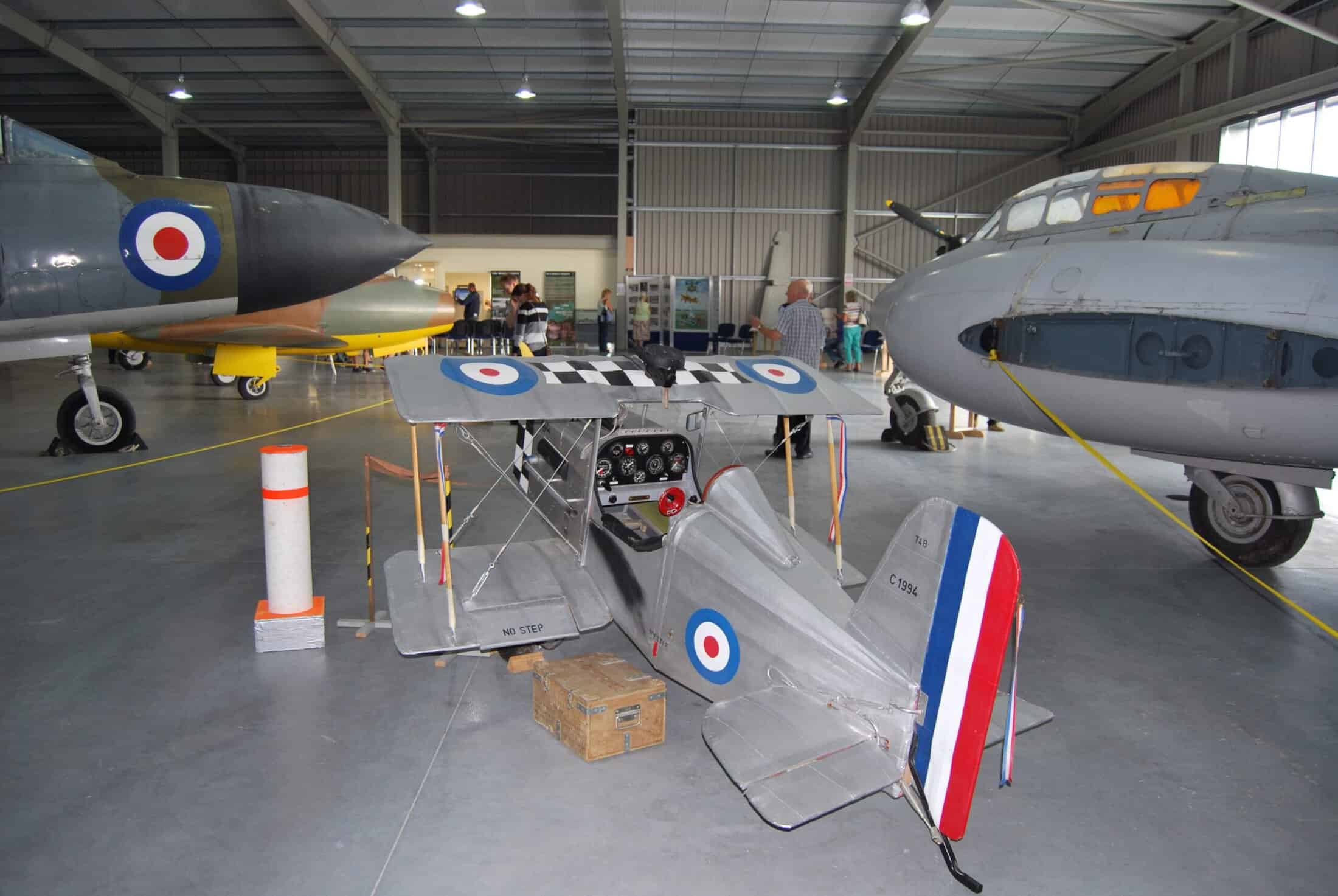
“Biggles” is our much loved ‘fund raiser’ and regularly appears at air shows and is a popular attraction with children who visit the museum.
Volunteers Chris Radford and Keith Eagles constructed Biggles in 1995 over 12 weekends.
Initially it was a publicity stunt to appear in the Gloucester Carnival parade mounted on top of a Range rover. Unfortunately, in the Carnival Biggles was not placed in the top three.
An investigation took place, and the organisers were under the impression that Biggles was a real aircraft, therefore he had been excluded!
Arguably JAM’s most famous exhibit – Biggles, has been in service for 30+ years providing “experience” to 1000’s of young aviation enthusiasts who have flown” her from destinations supported by JAM “Outreach” events in Gloucestershire.
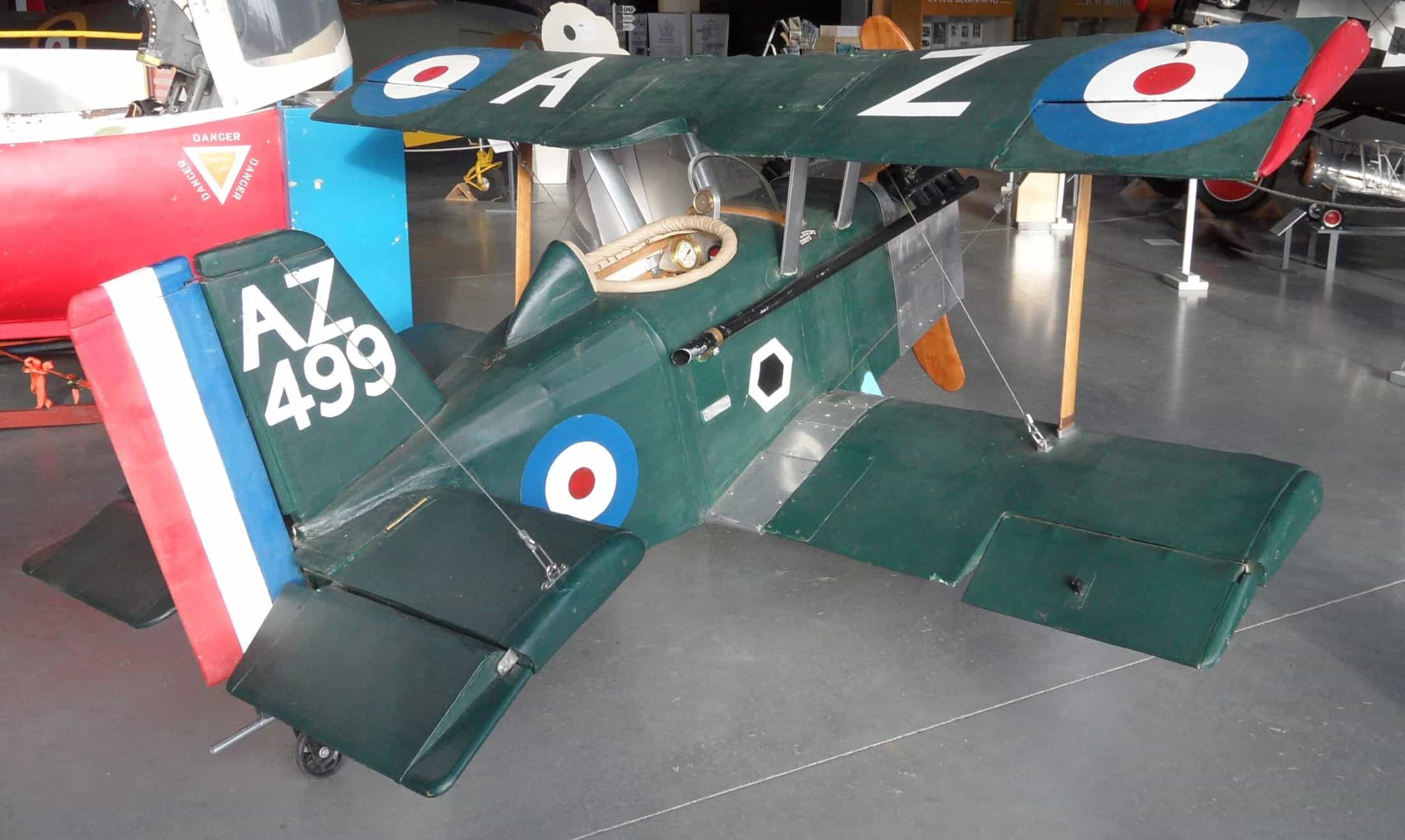
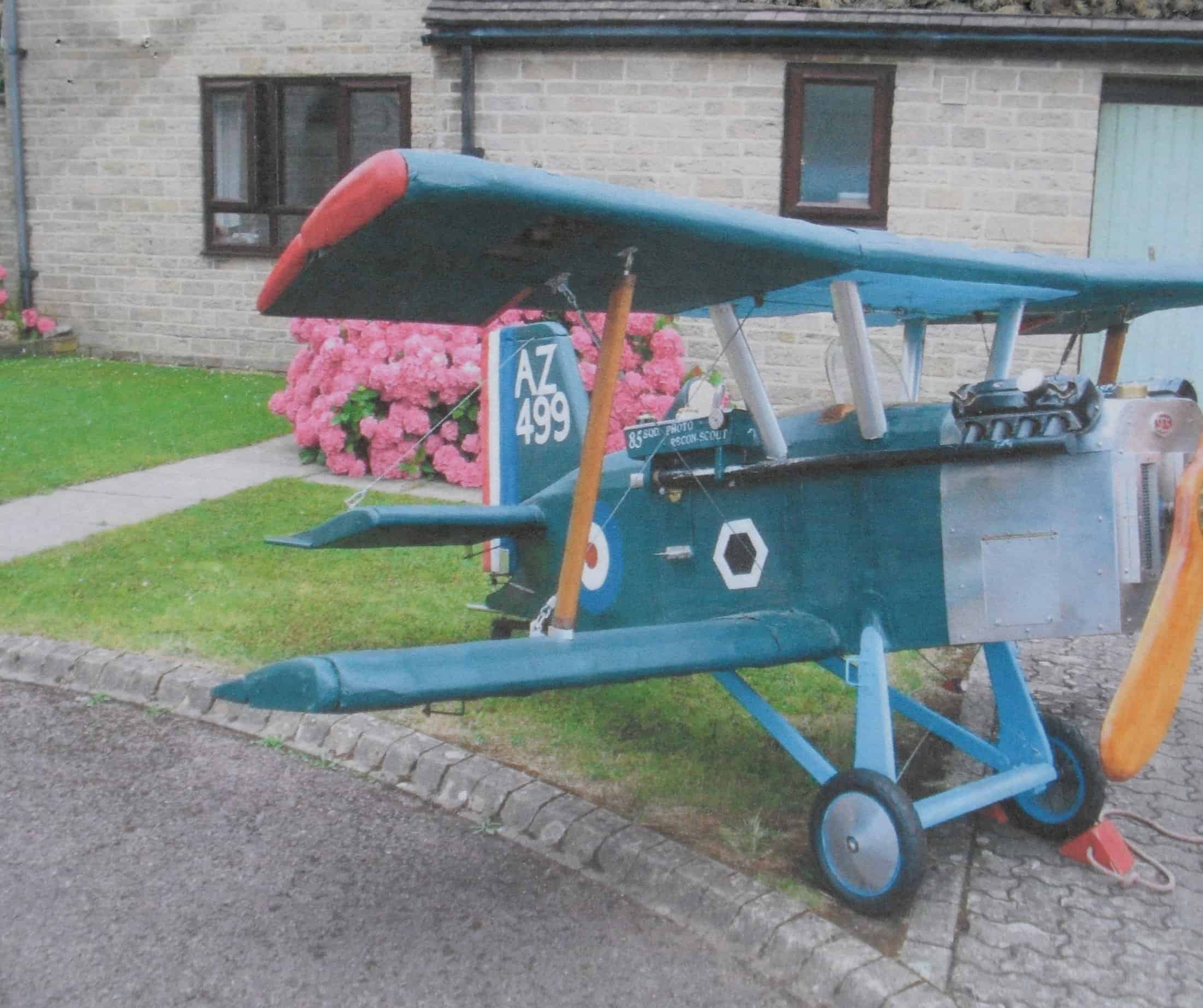
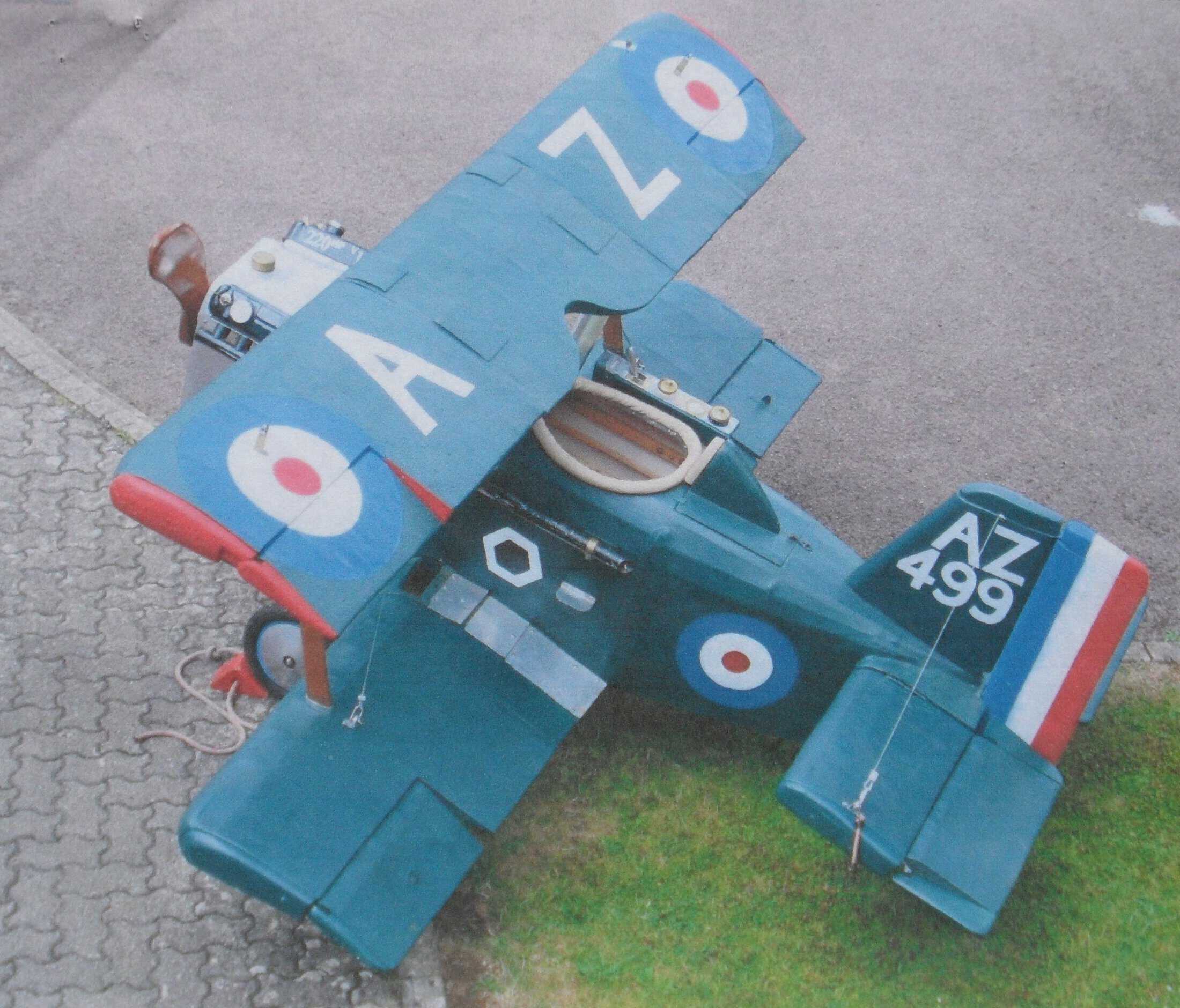
Biggles’ friend Amy lives at the Museum too, and she is always there, even when Biggles goes to Air Shows.
Amy is a half-size copy play-plane of the S.E.5 British biplane fighter aircraft of the First World War.
The Royal Aircraft Factory S.E.5 was a British biplane fighter aircraft of the First World War. It was developed by the Royal Aircraft Factory by a team consisting of Henry Folland, John Kenworthy and Major Frank Goodden. It was one of the fastest aircraft of the war, while being both stable and relatively manoeuvrable. According to aviation author Robert Jackson, the S.E.5 was: “the nimble fighter that has since been described as the ‘Spitfire of World War One’”.
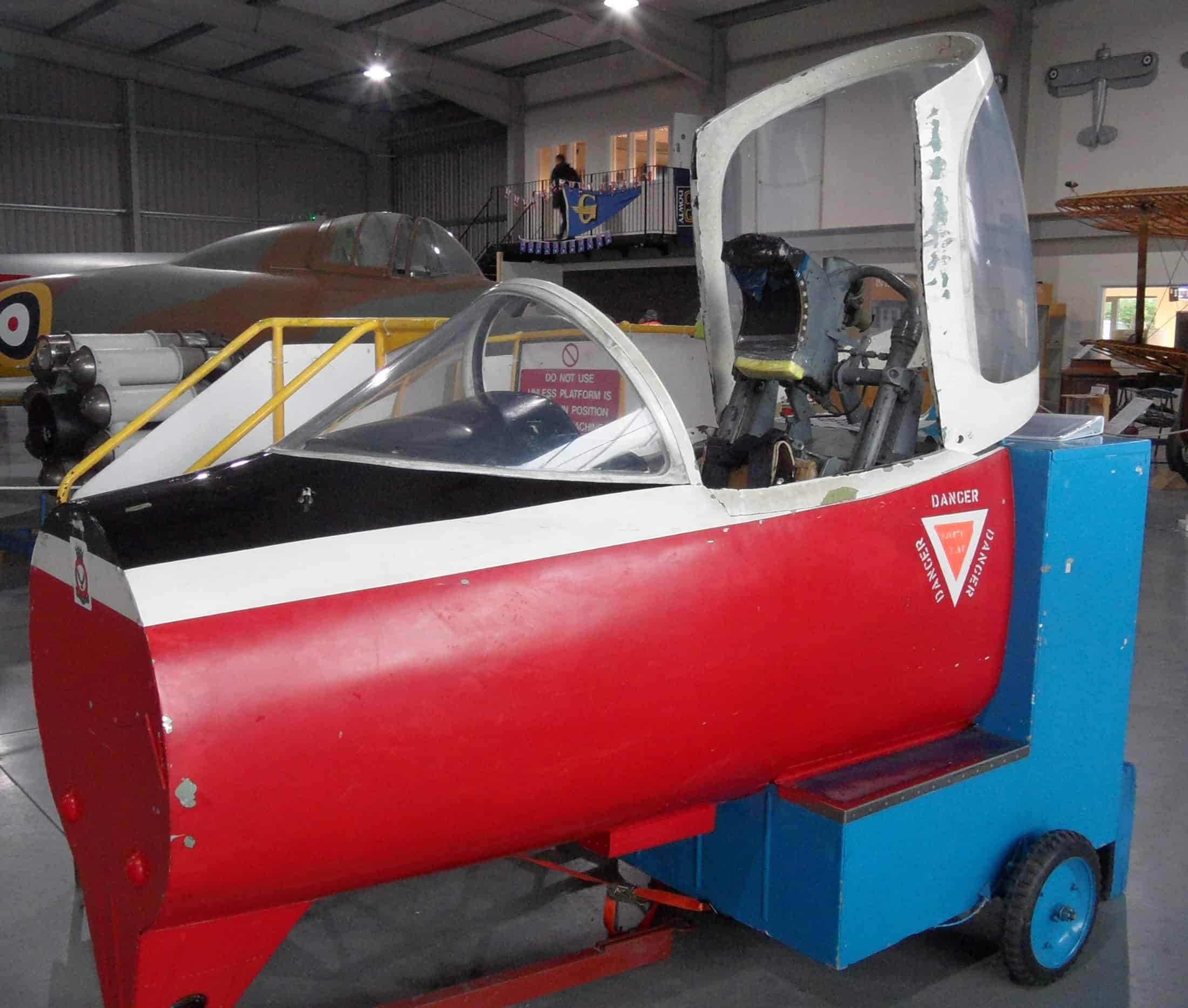
The two-seat RAF trainer version was used by the famous Red Arrows from 1965 until 1979 flying from Gloucestershire airfields, mainly based at Kemble.
Whilst our cockpit never flew, it was produced by Folland as a fully representative training aid and used for pilot familiarisation training. It is on loan from RAF OC 2342 (Innsworth) Squadron, Air Training Corps.

Opening Hours: Standard hours are Saturday – Sunday 10am – 4pm. View additional days.
Admission: There is no charge for admission to the Museum site, to the building or any exhibits, but donations to help meet our running costs and to fund our expansion plans are most definitely welcome! Click here to donate.
Find us: Meteor Business Park, Cheltenham Road East, Gloucester, GL2 9QL


